Hypertension — Know. Test. Manage. Prevent.
High blood pressure can develop without obvious warning signs. Knowing your numbers, checking your blood pressure regularly, and working with healthcare professionals can help protect your heart, brain, kidneys and overall health.
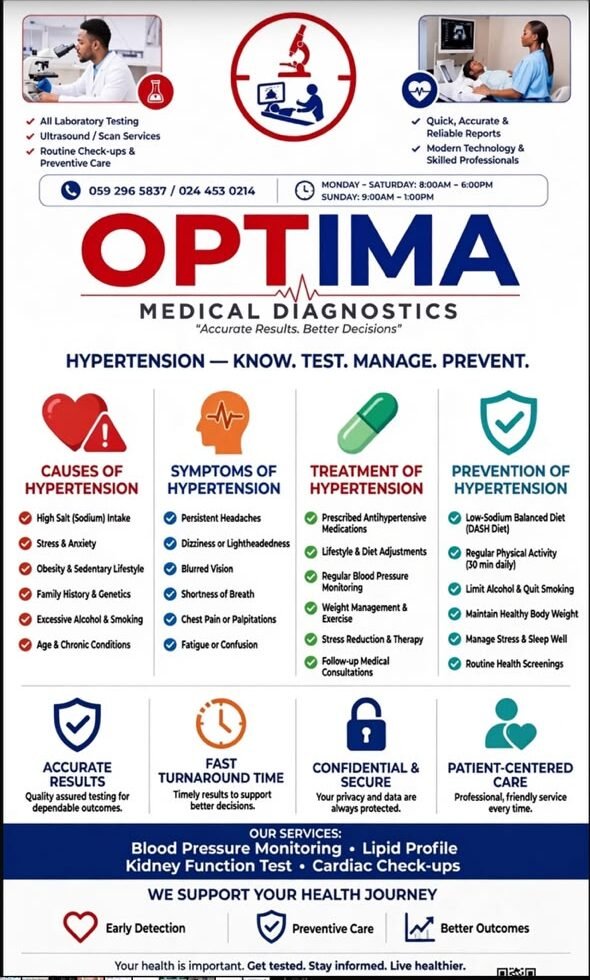
High blood pressure can be silent.
Hypertension is persistently elevated blood pressure. Many people do not feel any symptoms, which means a person can have high blood pressure without realizing it.
Regular blood-pressure measurement can help identify elevated readings and allow a healthcare professional to assess your health and recommend appropriate next steps.
Know the four important areas
Understanding risk factors, detection, management and prevention can help you make informed health decisions.
Causes & Risk Factors
- High-sodium diet
- Physical inactivity
- Overweight or obesity
- Family history
- Tobacco use
- Excessive alcohol use
- Increasing age
Possible Symptoms
- Often no symptoms
- Headache may occur
- Dizziness may occur
- Vision changes may occur
- Shortness of breath may occur
- Chest pain can occur with very high pressure
- Severe symptoms require urgent care
Treatment & Management
- Regular blood-pressure monitoring
- Healthy lifestyle changes
- Reduced sodium intake
- Regular physical activity
- Stress management
- Medicines when prescribed
- Regular follow-up with healthcare professionals
Prevention
- Choose a balanced, lower-sodium diet
- Stay physically active
- Avoid tobacco
- Limit alcohol
- Maintain a healthy weight
- Manage stress and sleep well
- Have routine health checks
You may have hypertension and feel completely well.
High blood pressure commonly has no warning signs. That is why routine measurement is so important. Symptoms such as headache, dizziness, vision changes, chest pain or breathing difficulty can occur, particularly with very high blood pressure, but symptoms alone cannot tell you whether your blood pressure is high.
When very high blood pressure causes symptoms
Very high blood pressure accompanied by concerning symptoms needs prompt medical attention.
Treatment is about consistent management.
Depending on your blood-pressure level and overall health, a healthcare professional may recommend lifestyle changes, medication, or a combination of approaches.
Don’t stop prescribed medicine on your own.
If you have concerns about your blood-pressure medicine, side effects, or treatment plan, speak with your doctor or healthcare professional before making changes.
Small healthy habits can make a difference.
Healthy lifestyle choices can help prevent or manage high blood pressure and reduce cardiovascular risk.
Reduce Salt
Choose foods lower in sodium and limit heavily salted and highly processed foods.
Stay Active
Regular physical activity can help support healthy blood pressure and cardiovascular health.
Avoid Tobacco
Avoiding tobacco helps protect blood vessels and lowers cardiovascular risk.
Limit Alcohol
Excessive alcohol consumption can contribute to higher blood pressure.
Manage Stress
Healthy stress-management habits can support overall cardiovascular health.
Get Checked
Regular blood-pressure checks can help identify elevated readings early.
Supporting your health journey
Optima Medical Diagnostics provides laboratory and diagnostic services to support informed healthcare decisions.
Blood Pressure Monitoring
Lipid Profile
Kidney Function Test
Cardiac Check-Ups
Know. Test. Manage. Prevent.
Your health is important. Regular health checks can help you stay informed about important health measurements and discuss any concerns with qualified healthcare professionals.
Sunday: 9:00 AM – 1:00 PM
Sinapi Aba Building, First Floor
This post is for general health education and awareness only. It does not provide a diagnosis or replace professional medical advice. Blood-pressure readings should be interpreted in the context of your individual health by a qualified healthcare professional. If you experience severe or concerning symptoms, seek urgent medical care.