Recognize the Warning Signs of Stroke
A stroke can happen suddenly. Knowing the warning signs can help you recognize an emergency and seek urgent medical attention without delay.
Every second matters when stroke strikes.
Stroke symptoms often appear suddenly. They can include weakness or numbness on one side of the body, difficulty speaking, vision changes, loss of balance and problems controlling an arm or hand.
If you notice possible stroke symptoms in yourself or someone else, seek emergency medical help immediately. Even if symptoms improve or disappear, urgent medical evaluation is still important.
Six warning signs to remember
Use B.E. F.A.S.T. to help recognize common stroke warning signs quickly.
Balance
Sudden loss of balance or coordination, dizziness, vertigo or difficulty walking.
Eyes
Sudden changes in vision, including difficulty seeing or loss of vision in one or both eyes.
Face
One side of the face may suddenly droop or become numb. Ask the person to smile and check for an uneven smile.
Arms
Sudden weakness or numbness in one arm, hand or leg, particularly on one side of the body.
Speech
Sudden difficulty speaking, slurred speech, confusion or difficulty understanding what others are saying.
Time
If one or more warning signs appear, seek emergency medical help immediately. Note when the symptoms began.
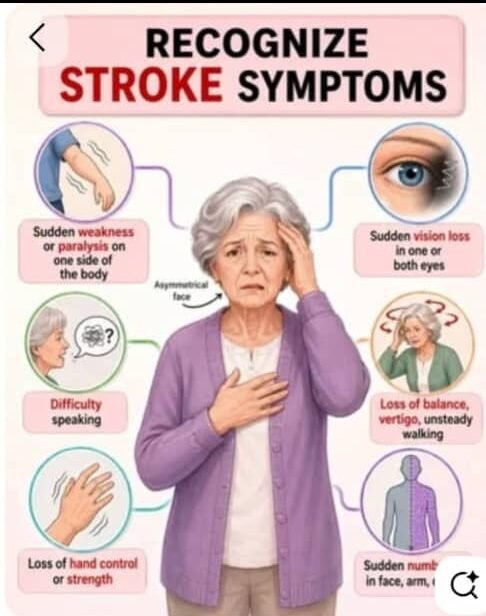
Symptoms shown in the infographic
Stroke symptoms can vary, but sudden changes deserve urgent attention.
Sudden weakness or paralysis
Especially weakness or numbness affecting one side of the body.
Sudden vision changes
Sudden trouble seeing or loss of vision in one or both eyes.
Difficulty speaking
Speech may suddenly become slurred, difficult or confusing.
Loss of balance
Sudden dizziness, vertigo, loss of coordination or difficulty walking.
Loss of hand or arm control
Sudden weakness, numbness or difficulty controlling an arm or hand.
Sudden numbness
Numbness or weakness can affect the face, arm or leg, particularly on one side.
What should you do if you suspect a stroke?
Do not wait to see whether the symptoms improve. Stroke requires urgent medical evaluation.
The sooner a possible stroke is recognized and medical care begins, the sooner healthcare professionals can assess the situation and determine appropriate treatment.
Know your stroke risk factors
Some stroke risk factors can be managed with support from healthcare professionals.
High Blood Pressure
Regular monitoring and appropriate management can help reduce cardiovascular risk.
Diabetes
Work with a healthcare professional to monitor and manage blood glucose levels.
High Cholesterol
Regular health checks can help identify cholesterol concerns and guide appropriate care.
Smoking
Avoiding tobacco is an important part of cardiovascular health and stroke-risk reduction.
Know the signs. Protect your health.
Regular health checks can help you understand important health measurements and discuss potential risk factors with a qualified healthcare professional.
Sinapi Aba Building, First Floor
This post is provided for health education and awareness only. It is not a diagnosis or a substitute for professional medical care. If you or someone around you develops sudden symptoms suggestive of stroke, seek emergency medical attention immediately.