Gonorrhea
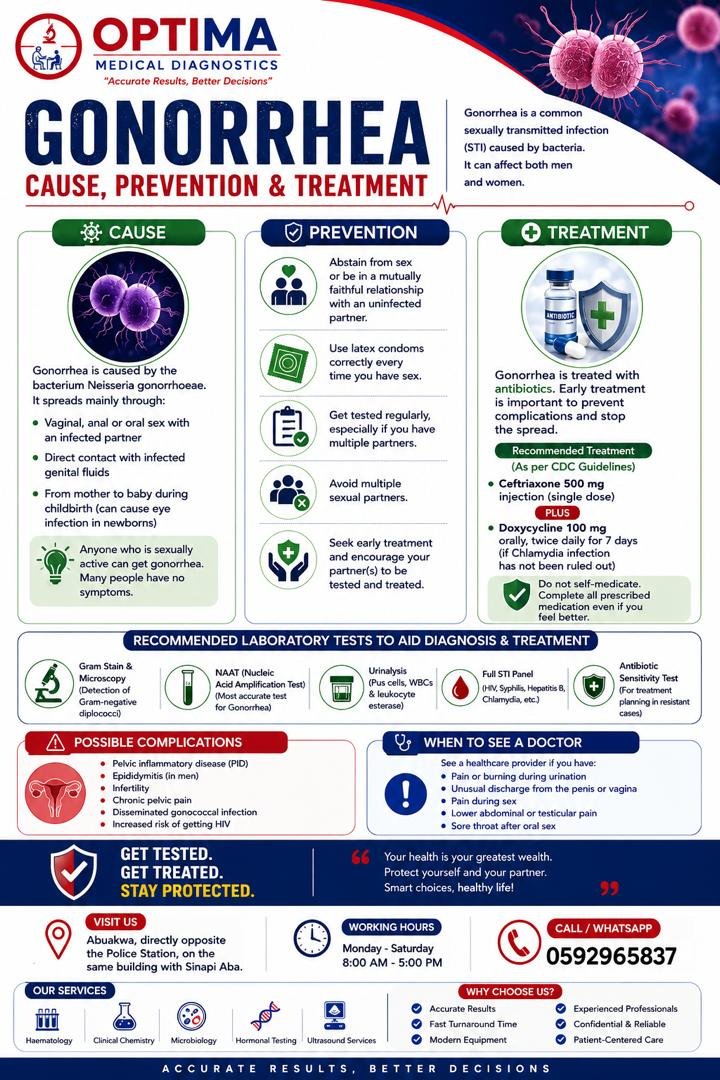
Gonorrhea is a common sexually transmitted infection caused by the bacterium Neisseria gonorrhoeae. It can affect both men and women and may sometimes occur without noticeable symptoms.
Understanding Gonorrhea
Learning how gonorrhea spreads, how it can be prevented, and why testing matters can help protect your health.
Bacterial Infection
Gonorrhea is caused by the bacterium Neisseria gonorrhoeae.
Testing Matters
Laboratory testing can help healthcare professionals confirm an infection and guide appropriate care.
Early Care Matters
Prompt professional evaluation and treatment can reduce the risk of complications and transmission.
What You Should Know
Cause
Gonorrhea is caused by Neisseria gonorrhoeae. It can spread through sexual contact with an infected person and can also be passed from mother to baby during childbirth.
- Vaginal, anal or oral sexual contact
- Contact with infected genital fluids
- Transmission during childbirth
Prevention
- Use condoms correctly and consistently.
- Consider regular STI testing when appropriate.
- Discuss STI testing with sexual partners.
- Reduce exposure to multiple sexual partners.
- Seek professional care if symptoms appear.
Treatment
Gonorrhea can be treated with antibiotics prescribed and administered according to appropriate clinical guidance. The correct treatment depends on the person’s circumstances and current medical guidelines.
- Do not self-medicate.
- Complete prescribed treatment as directed.
- Follow your healthcare provider’s advice.
- Sexual partners may also need evaluation and treatment.
Recommended Laboratory Tests
Healthcare professionals may use laboratory tests to help diagnose gonorrhea and assess other sexually transmitted infections.
Possible Complications
When gonorrhea is not diagnosed and treated appropriately, complications can occur. These can include:
- Pelvic inflammatory disease (PID)
- Epididymitis
- Infertility
- Chronic pelvic pain
- Disseminated gonococcal infection
- Increased risk of acquiring HIV
When to See a Healthcare Provider
Gonorrhea can sometimes cause no noticeable symptoms. Seek professional medical advice if you experience concerning symptoms or believe you may have been exposed.
Possible Symptoms
- Pain or burning during urination
- Unusual genital discharge
- Pain during sexual activity
- Lower abdominal or pelvic pain
- Testicular pain or swelling
- Other unusual genital or urinary symptoms
Remember
Some people with gonorrhea may have no symptoms. Testing is therefore important when a healthcare professional recommends it or when there has been a possible exposure.
If you receive a positive diagnosis, follow professional treatment advice and discuss partner notification and testing with your healthcare provider.
Get Tested. Get Treated. Stay Protected.
Your health is your greatest wealth. Protect yourself and your partner through informed choices, appropriate testing and professional healthcare.
Call / WhatsApp: 059 296 58378:00 AM – 5:00 PM